Blog

  • Leveraging Employee Monitoring Tools to Enhance Teamwork

    Leveraging Employee Monitoring Tools to Enhance Teamwork

    Teamwork can vary when people work from different places because they might be working on several things at once. A manager may see tasks getting completed while still having no idea why one team keeps missing deadlines. This is where employee monitoring tools can provide clues. Such tools show how work is progressing without turning the workplace into a place where everyone feels watched.

    See Where the Work Is Getting Stuck

    One benefit of tracking work activity is that it reveals bottlenecks. Imagine a project where five people work but one person is waiting for information from another department. It may look like that employee is slow, however, activity data can tell a different story. Managers can look at work patterns to understand where delays are happening. This gives the team something concrete to discuss instead of relying on assumptions. Sometimes the problem is not an employee’s performance at all. It could be unclear instructions alongside a workload that was never distributed properly.

    Make Team Discussions Useful

    Nobody enjoys meetings where people spend time trying to figure out what went wrong. Data can make these conversations focused. Managers can check the workflow to identify where work slows instead of asking why tasks take long time. This gives employees the chance to explain what is happening from their side. Perhaps a designer is spending hours fixing repeated changes or a salesperson is losing time entering the same information into several systems. The team can work together on a solution once the problem is visible.

    Use Data Without Creating Distrust

    There is a very thin line between being able to understand the patterns of employees’ work while introducing them to surveillance. This is why the monitoring should also be optimized by explaining what will be tracked. In most cases, employees will welcome the idea of being able to improve coordination in the workplace, as opposed to being caught doing something wrong. This means that for teams that have decided to use employee monitoring software, the data collected should be seen as a starting point for discussions.

    Turn Insights Into Collaboration

    Monitoring becomes useful when teams act on what the data reveals. Perhaps the workflow can be simplified if employees spend too much time switching between applications. The team may need clearer ownership of tasks if communication is slowing down projects. If certain processes repeatedly cause delays, they can be reviewed and changed. Tools like Controlio analytics 2.0 help teams look at work patterns to identify areas that deserve attention. Technology is only part of the solution. What matters is what managers do with the information.

    Better Teamwork Starts With Visibility

    Teamwork is not about making everyone work in the same way because people have ways of working so what matters is knowing whether the team has what it needs to get work done without problems. Monitoring tools can offer that view by showing where the slow parts are or where processes are not working well. When the data is used to improve how people work together of just watching what they do, it can become a helpful tool for creating a more efficient team.

  • Bolagila Online Games With Engaging Features for Daily Digital Entertainment

    Bolagila Online Games With Engaging Features for Daily Digital Entertainment

    A Fresh Approach to Everyday Digital Entertainment

    Digital entertainment has become an important part of modern routines, giving people convenient ways to relax, explore interactive experiences, and enjoy short breaks throughout the day. Among the many platforms available online, bolagila presents an entertainment-focused environment designed around accessible online games and engaging digital experiences. Instead of requiring complicated equipment or lengthy preparation, online gaming platforms can provide entertainment directly through connected devices. This accessibility makes them suitable for users who enjoy interactive activities during free moments. A well-designed gaming platform can also create a sense of continuity, allowing users to return whenever they want to explore familiar games or discover something different. As digital habits continue to evolve, convenience, variety, straightforward navigation, and enjoyable presentation have become important aspects of the overall experience.

    Features That Support Convenient Entertainment

    • Accessible digital experiences: Online games can be enjoyed through compatible internet-connected devices without requiring a traditional gaming setup.
    • Flexible entertainment: Users can choose activities according to their available time and personal interests.
    • Interactive presentation: Visual elements, menus, animations, and responsive controls can make digital entertainment more engaging.
    • Simple access: A straightforward interface can reduce unnecessary steps between opening a platform and exploring its available content.

    Exploring Variety Across Online Gaming Experiences

    Variety is one of the major reasons people explore online gaming platforms. Different users naturally have different preferences, so a broad collection of experiences can make a platform more appealing to a wider audience. Some people prefer quick games that can be completed within a few minutes, while others enjoy activities that encourage longer sessions. Variety can also prevent entertainment from becoming repetitive. When users can move between different themes, formats, and styles, they have more opportunities to find something that matches their mood. The most useful platforms therefore focus not only on providing games but also on creating an environment where discovering different entertainment options feels straightforward. This approach can make daily digital leisure more flexible and personalized.

    Why Game Variety Matters

    • Different play styles: A varied selection can accommodate people who prefer fast-paced, strategic, casual, or visually focused experiences.
    • Reduced repetition: Multiple options allow users to switch activities when they want something new.
    • Mood-based choices: Users can select lighter or more immersive entertainment depending on their available time and preferences.
    • Ongoing discovery: A diverse collection encourages users to explore unfamiliar titles and formats.

    User-Friendly Design Makes Digital Gaming More Enjoyable

    The design of an online gaming platform can significantly influence how comfortably users interact with it. Even an extensive selection of games may become difficult to enjoy if menus are confusing or important information is difficult to locate. Clear organization helps users understand where to begin, how to navigate between sections, and where different types of entertainment can be found. Responsive layouts are particularly useful because people access online content through smartphones, tablets, laptops, and desktop computers with different screen dimensions. A platform that adapts effectively to these environments can provide a more consistent experience. Good interface design is ultimately about removing unnecessary obstacles and helping users focus on the entertainment itself rather than struggling with navigation.

    Design Elements That Improve Accessibility

    • Clear navigation: Organized menus can make it easier to locate categories and explore available games.
    • Responsive layouts: Flexible designs can adapt to different screen sizes and orientations.
    • Readable information: Well-presented text and recognizable controls can make interactions easier to understand.
    • Efficient loading: Smooth transitions can help maintain a comfortable browsing experience when internet conditions allow.

    Interactive Features Add Depth to Daily Digital Leisure

    Engagement is another important element of online entertainment. Interactive features can transform passive browsing into an activity that encourages participation and attention. Depending on the game, engagement may come from decision-making, changing objectives, visual feedback, progression systems, or different challenge structures. These elements can give users reasons to remain interested without requiring every experience to be complicated. Short sessions can also become more enjoyable when games provide immediate feedback and understandable goals. For people who use online entertainment during breaks, this balance between accessibility and interaction can be particularly valuable. The strongest experiences generally make it easy to understand what is happening while still offering enough variety to maintain curiosity.

    Interactive Elements Users May Appreciate

    • Progressive challenges: Increasing levels of difficulty can create a sense of development within suitable games.
    • Immediate feedback: Visual or audio responses can help users understand the results of their actions.
    • Clear objectives: Simple goals can make games easier to approach, particularly for first-time users.
    • Replay potential: Different outcomes or changing challenges can encourage users to revisit an experience.

    Creating a Balanced Routine Around Online Entertainment

    Digital entertainment works best when it complements everyday responsibilities rather than interfering with them. Online games can be useful for short periods of relaxation, especially when users establish boundaries around their screen time. A balanced approach allows entertainment to remain enjoyable while leaving sufficient time for work, study, family, physical activity, and rest. Users can decide when gaming fits naturally into their schedule and select experiences that match the amount of time available. Someone with only a few minutes may prefer a quick activity, while someone enjoying a longer leisure period might explore more detailed options. Thinking about entertainment as one part of a broader daily routine can help people maintain control over their digital habits.

    Practical Ways to Keep Gaming Balanced

    • Set personal time limits: Decide how long a leisure session should last before starting.
    • Choose suitable sessions: Match the type of game with the amount of free time available.
    • Take regular breaks: Moving away from the screen periodically can support a more comfortable routine.
    • Protect essential activities: Entertainment should not replace sleep, responsibilities, exercise, or important social interactions.

    Discovering More Online Entertainment Options

    As online entertainment continues to develop, users have more opportunities to explore digital games through convenient platforms. The experience is not limited to the games themselves; it also includes how easily people can discover content, understand available features, and move between different activities. Readers interested in exploring the platform can find additional information through the following resource: For more: https://bolagila.win. When exploring any online entertainment service, it is sensible to review its available features, access requirements, terms, and applicable restrictions before deciding how to use it. Users should also consider whether the platform works properly with their preferred device and connection. Taking a few moments to understand a service can make the overall digital experience more convenient and predictable.

    Things to Consider Before Exploring

    • Device compatibility: Check whether the platform functions properly on the device and browser you normally use.
    • Connection quality: A stable internet connection can contribute to smoother online interactions.
    • Platform information: Review the available terms, conditions, and relevant policies.
    • Personal preferences: Explore categories and experiences that genuinely match your interests and available leisure time.

    Technology Continues to Shape Interactive Entertainment

    Technology has transformed how people discover and consume entertainment. Faster internet connections, improved mobile hardware, responsive websites, and increasingly sophisticated software have made interactive experiences more accessible than they were in the past. These developments allow online games to incorporate richer graphics, smoother interfaces, responsive controls, and more varied gameplay structures. At the same time, simplicity remains important because users do not necessarily want a complicated experience every time they seek entertainment. Future developments are likely to continue balancing technological capability with accessibility. The result could be increasingly adaptable platforms where users can move between short casual activities and more immersive experiences according to their preferences.

    Digital Trends Influencing Online Games

    • Mobile accessibility: Smartphones continue to provide convenient access to entertainment in different everyday settings.
    • Improved browser technology: Modern browsers can support increasingly sophisticated interactive experiences.
    • Responsive interfaces: Platforms can adapt their presentation to different devices and screen sizes.
    • Personalized discovery: Better organization and recommendation systems can help users find content relevant to their interests.

    Building a More Enjoyable and Responsible Digital Experience

    An engaging online entertainment platform combines accessibility, variety, interaction, and thoughtful design. These qualities can make digital games easier to discover and more enjoyable to revisit during appropriate leisure periods. However, the quality of an entertainment experience also depends on how users approach it. Choosing suitable activities, maintaining reasonable screen-time boundaries, protecting personal information, and understanding platform policies are all useful parts of responsible digital engagement. Users can also improve their experience by keeping software updated, using secure connections, and paying attention to the information provided by an online service. With these habits in place, digital entertainment can remain a convenient addition to everyday leisure without becoming the only source of recreation.

    Habits for a Better Digital Entertainment Experience

    • Use secure practices: Avoid sharing sensitive personal information unnecessarily and use appropriate account-security measures.
    • Stay informed: Read platform rules and understand the conditions that apply to available services.
    • Maintain balance: Combine online entertainment with offline hobbies, social activities, movement, and relaxation.
    • Explore thoughtfully: Try different experiences while remaining attentive to personal preferences and time limits.

    Conclusion: Making Daily Digital Entertainment More Engaging, Convenient, and Balanced

    Online gaming has developed into a flexible form of digital entertainment that can fit into many different lifestyles. Accessible interfaces, diverse experiences, interactive features, and adaptable device support can make online platforms appealing to people looking for convenient ways to spend their leisure time. The value of these platforms ultimately comes from how effectively they combine entertainment with usability. A clear interface can make exploration easier, variety can reduce repetition, and interactive features can provide greater involvement. At the same time, responsible habits remain important because enjoyable technology should complement rather than dominate everyday life. By selecting suitable activities, maintaining reasonable boundaries, and paying attention to platform information, users can create a more balanced approach to online entertainment. As technology continues to advance, digital gaming will likely remain an evolving part of modern leisure, offering new ways for people to interact, explore, and enjoy their free time.

  • Study in Arizona: A Guide for International Students From Around the World

    Study in Arizona: A Guide for International Students From Around the World

    Choosing where to study abroad is a major decision. Students usually look at the quality of education, tuition fees, accommodation, job opportunities, weather, safety, and the overall experience they can expect in a new country. For students from different parts of the world, Arizona can be an interesting option because it combines well-known universities with a distinctive lifestyle and a growing international student community.

    Located in the southwestern United States, Arizona is famous for its desert landscapes, warm climate, and places such as the Grand Canyon. However, there is much more to the state than its tourist attractions. Cities including Phoenix, Tempe, Tucson, and Flagstaff have developed into important education centers with universities, colleges, research institutions, and diverse communities.

    Why Do International Students Choose Arizona?

    Students from Asia, Europe, Africa, the Middle East, Latin America, and other regions may find Arizona attractive for several reasons. One of the biggest is the range of academic programs available. Students can study subjects such as business, computer science, engineering, healthcare, education, environmental science, communication, and many other fields.

    Arizona also has universities with large campuses and international communities. This can make the transition easier for students who are arriving in the United States for the first time. Meeting classmates from different countries can also provide an opportunity to learn about other cultures while building friendships and professional connections.

    Another advantage is the variety of locations. A student who enjoys a busy urban environment may prefer the Phoenix metropolitan area, while someone looking for a smaller college-town atmosphere might consider places such as Flagstaff.

    Universities and Colleges in Arizona

    Several higher-education institutions are available to international students.

    Arizona State University, based in the Phoenix metropolitan area, is one of the state’s most recognized universities. It offers a very broad selection of undergraduate and graduate programs and has a large student population.

    The University of Arizona in Tucson is another major institution, particularly known for research and programs across areas such as science, technology, business, medicine, and the arts.

    Northern Arizona University, located in Flagstaff, offers another type of university experience. Flagstaff has a cooler climate than much of the rest of Arizona and is surrounded by forests and mountain landscapes.

    Besides these major universities, Arizona has community colleges and private institutions that offer additional pathways for students. Some students begin at a community college before transferring to a four-year university.

    Studying in Arizona From Different Countries

    The experience of studying in Arizona can be different depending on where a student comes from.

    For students from India, Pakistan, Bangladesh, and other South Asian countries, popular fields may include computer science, engineering, business, and data-related programs. Students may also appreciate the international communities available around major university campuses.

    Students from China, South Korea, Japan, Vietnam, and other parts of East and Southeast Asia may find a wide range of academic programs and multicultural student organizations. Universities often have clubs and activities that help international students connect with people who share similar cultural backgrounds.

    For students from European countries, Arizona can offer a very different lifestyle from what they may be accustomed to. The large campuses, American college traditions, and warm desert climate can make the experience feel quite different from studying in Europe.

    Students from African countries may also find opportunities across business, technology, health, agriculture, and other academic fields. International student organizations can provide useful support during the transition to American university life.

    Students from the Middle East can find multicultural communities and a variety of academic programs. Meanwhile, students from Latin America and the Caribbean may appreciate the cultural diversity of Arizona and its connections to the broader southwestern United States.

    Of course, students should not choose a university solely because people from their home country attend it. Academic programs, total cost, location, accreditation, and personal goals should all be considered.

    Tuition and Living Expenses

    The cost of studying in Arizona depends heavily on the university, degree level, program, and lifestyle of the student. International students generally pay more than in-state students at public universities.

    Tuition is only one part of the total budget. Students also need to consider housing, food, transportation, health insurance, textbooks, university fees, and personal expenses.

    Living costs can also vary significantly between cities. Housing in the Phoenix metropolitan area can differ from housing in Tucson or Flagstaff. Students should research current rental prices and university housing options before making a final decision.

    Creating a realistic yearly budget is one of the most important steps before applying. Students should calculate their expected tuition and living expenses rather than relying only on the advertised tuition figure.

    Scholarships and Financial Support

    Scholarships can make studying in Arizona more affordable. Some universities provide scholarships specifically for international students, while others offer awards based on academic performance, leadership, extracurricular activities, or other criteria.

    Students should check the official scholarship information of each university because requirements and deadlines vary. Some scholarships may require a separate application, while others may automatically consider eligible applicants.

    External scholarships and funding programs may also be available through governments, organizations, foundations, and educational institutions in a student’s home country.

    It is important to remember that scholarships are competitive. Students should apply early and carefully review eligibility requirements rather than assuming that every scholarship is available to international students.

    Admission Requirements

    Admission requirements depend on the university and the academic program. International applicants commonly need academic transcripts, proof of English proficiency when required, identification documents, and other application materials.

    Depending on the program, students may also need standardized test scores, recommendation letters, a personal statement, a portfolio, or additional documents.

    Graduate programs can have different requirements from undergraduate programs. For example, a master’s program may ask for a bachelor’s degree, while certain professional programs may require specific prerequisite courses.

    Students should always check the university’s official admissions website for the latest requirements because policies can change.

    Student Life and Life Outside the Classroom

    Studying abroad is not only about attending lectures and completing assignments. Student life can become an important part of the overall experience.

    Arizona universities typically offer student clubs, sports, cultural organizations, academic societies, volunteering opportunities, and other activities. International students can participate in these activities to meet people and become more comfortable with American campus culture.

    Arizona’s geography also provides plenty of opportunities for outdoor activities. Students can explore hiking trails, deserts, forests, canyons, and other natural areas. The state is particularly attractive to people who enjoy outdoor adventures.

    However, Arizona’s climate should be considered carefully. Summers in many parts of the state can be extremely hot. Students arriving from countries with cooler climates may need some time to adjust.

    Working While Studying

    International students should understand the rules governing employment in the United States before accepting a job. The type of work permitted can depend on immigration status, university authorization, and other regulations.

    Students should speak with their university’s international student office before beginning employment. Th


  • Hello world!

    Welcome to WordPress. This is your first post. Edit or delete it, then start writing!

  • The Benefits of Practical Learning for Students

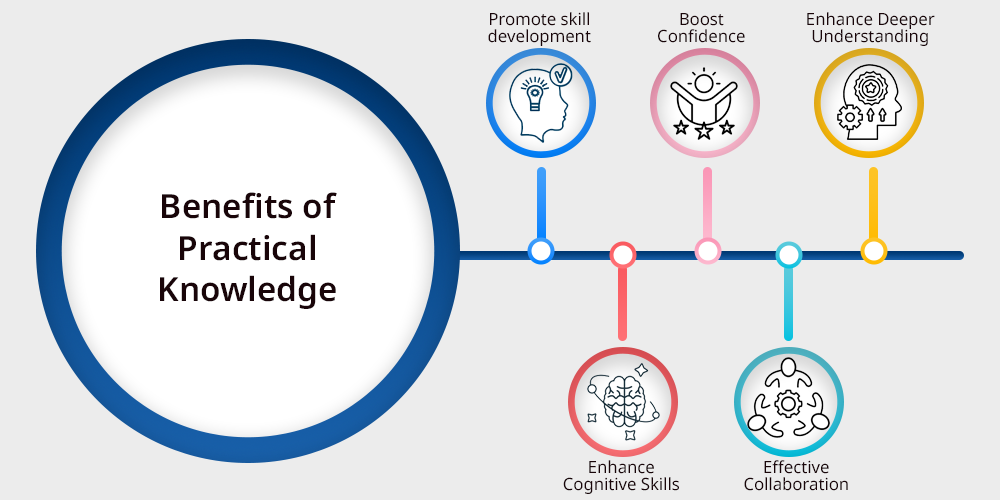
    The Benefits of Practical Learning for Students

    Education is often associated with textbooks, lectures, assignments, and examinations. These traditional methods are important, but students can understand many concepts more effectively when they have an opportunity to apply what they learn in practical situations.

    Practical learning allows students to move beyond theory and experience how knowledge works in the real world. It can include experiments, projects, field trips, workshops, presentations, internships, and other activities that require students to actively participate in the learning process.

    Connecting Theory With Real Life

    One of the main benefits of practical learning is that it helps students connect classroom knowledge with real-world situations.

    For example, a science student may understand a concept through a textbook, but conducting an experiment can provide a clearer understanding of how that concept works. Similarly, business students can learn about marketing strategies and then apply those ideas to a practical project.

    These experiences can make lessons easier to understand and remember.

    Developing Problem-Solving Skills

    Real-world problems rarely have simple answers. Students often need to examine a situation, identify the main issue, consider possible solutions, and decide which approach is most appropriate.

    Practical activities give students opportunities to develop these skills.

    A project may not always go exactly as planned, and that can be valuable. Students can learn to identify mistakes, adjust their approach, and try again. This process can teach them that solving a problem often requires patience and experimentation.

    Encouraging Active Participation

    Traditional lectures can sometimes make students passive listeners. Practical learning encourages them to become active participants.

    Instead of only listening to an explanation, students may need to conduct research, build something, perform an experiment, create a presentation, or work with classmates.

    Active participation can make learning more engaging because students have a direct role in the process.

    Building Communication Skills

    Many practical learning activities involve teamwork. Students may need to discuss ideas, divide responsibilities, explain their findings, and present their work to others.

    These activities can help develop communication skills that are useful in both education and professional life.

    Learning how to explain an idea clearly is particularly important. A student may understand a topic very well but still need practice communicating that knowledge to other people.

    Preparing Students for Professional Life

    Education also prepares students for responsibilities beyond school and university. Practical experience can introduce them to situations they may encounter in their future careers.

    Internships, workshops, laboratory activities, and project-based assignments can help students understand how theoretical knowledge is applied in professional environments.

    They can also provide opportunities to develop habits such as meeting deadlines, working with others, following instructions, and taking responsibility for assigned tasks.

    Learning From Mistakes

    Mistakes are a natural part of practical learning. A student may conduct an experiment incorrectly, make an error in a project, or discover that an initial idea does not work.

    Instead of simply receiving a grade, students can examine what went wrong and consider how they could improve the result.

    This process can develop resilience and encourage students to approach challenges with a more constructive attitude.

    Making Learning More Memorable

    People often remember experiences more easily when they actively participate in them. Practical activities can create memorable learning experiences because students are doing something rather than only reading or listening.

    For example, visiting a museum, conducting a science experiment, creating a computer project, or participating in a community activity can give students a practical connection to a subject.

    These experiences may help students remember important concepts long after a lesson has ended.

    Technology and Practical Education

    Modern technology has created even more opportunities for practical learning. Simulations, educational software, virtual laboratories, design tools, and online collaboration platforms can allow students to practice skills in different environments.

    Technology can be particularly useful when certain activities are expensive, difficult, or unsafe to perform in a traditional classroom.

    However, digital tools work best when they support clear educational goals rather than simply adding technology to a lesson.

    The Role of Teachers

    Teachers remain important in practical learning. They can design meaningful activities, provide instructions, monitor progress, and give feedback.

    A teacher can also help students understand the connection between an activity and the academic concepts behind it. Without proper guidance, a practical task may become simply an activity rather than a meaningful learning experience.

    Good planning can ensure that students understand both what they are doing and why they are doing it.

    Final Thoughts

    Practical learning can make education more engaging by connecting theoretical knowledge with real-world experience. It can help students develop problem-solving, communication, teamwork, and decision-making skills while giving them opportunities to learn from mistakes.

    The most effective education does not necessarily require choosing between traditional teaching and practical activities. Combining classroom instruction with hands-on experiences can give students a broader and more useful learning experience.

    When students have opportunities to apply their knowledge, education can become more than memorizing information. It can become a process of discovering how that knowledge works in the world around them.

  • Why Time Management Is Important for Students

    Why Time Management Is Important for Students

    Students often have many responsibilities to manage at the same time. Classes, homework, exams, projects, family activities, and personal interests can quickly make a schedule feel overwhelming. Learning how to manage time effectively can help students organize these responsibilities and create a healthier approach to their education.

    Time management does not mean studying every hour of the day. Instead, it means understanding priorities, planning ahead, and using available time wisely.

    Understanding Priorities

    One of the first steps in effective time management is knowing which tasks are most important.

    Students may have several assignments due during the same week. Rather than trying to complete everything at the last minute, they can identify deadlines and divide larger tasks into smaller steps.

    For example, a research project can be separated into topic selection, research, note-taking, writing, editing, and final review. Completing these steps gradually can make a large assignment feel much more manageable.

    Creating a Realistic Schedule

    A simple schedule can help students understand how their time is being used. A daily or weekly plan can include classes, study sessions, assignments, breaks, exercise, family responsibilities, and personal activities.

    The schedule should be realistic. Planning ten hours of studying when only a few hours are actually available can create unnecessary pressure.

    A flexible plan is often more useful because unexpected responsibilities can appear during the week.

    Avoiding Procrastination

    Procrastination is one of the most common challenges students face. It is easy to postpone an assignment when the deadline seems far away.

    However, delaying work can create stress when several deadlines arrive at the same time.

    One useful approach is to start with a small amount of work. Reading a few pages, writing a short paragraph, or organizing research notes can be enough to begin a task.

    Once students start, continuing the work often becomes easier.

    Taking Regular Breaks

    Effective studying does not require sitting at a desk for several hours without stopping. Regular breaks can give students an opportunity to rest and return to their work with renewed attention.

    A short walk, a glass of water, or a few minutes away from a screen can provide a useful mental break.

    The goal is to maintain a balance between focused study and appropriate rest.

    Managing Digital Distractions

    Phones, social media, games, and entertainment websites can make it difficult to concentrate. Notifications can interrupt study sessions even when students intend to focus.

    Students can reduce distractions by putting their phones away, turning off unnecessary notifications, or using a quiet study environment.

    This does not mean avoiding technology completely. Digital tools can be extremely useful for research, communication, and education when they are used with a clear purpose.

    Setting Specific Goals

    Instead of making a general goal such as “study today,” students can create specific targets.

    For example, they might decide to read one chapter, complete five mathematics problems, or write the introduction to an assignment.

    Specific goals make it easier to measure progress. They can also provide a sense of accomplishment as individual tasks are completed.

    Making Time for Sleep

    Sleep is an important part of a student’s routine. Staying awake late every night to complete assignments may reduce the amount of rest needed for the following day.

    A consistent sleep schedule can help students maintain their daily routine and arrive at classes feeling more prepared.

    Time management should therefore include enough time for sleep rather than treating rest as something that can always be sacrificed.

    Learning to Say No

    Students may sometimes accept too many activities because they want to participate in everything. Extracurricular activities can be valuable, but taking on too many responsibilities can make it difficult to manage academic work.

    Learning to consider available time before accepting a new commitment can help students maintain a balanced schedule.

    It is reasonable to prioritize activities that are meaningful and manageable.

    Reviewing the Schedule

    Time management is not a skill that becomes perfect immediately. Students can review their schedules regularly and identify what is working and what is not.

    Perhaps a particular study period is too short, or perhaps certain activities consistently take longer than expected. Making small adjustments can gradually create a more effective routine.

    The important thing is to learn from experience rather than expecting every plan to work perfectly.

    Final Thoughts

    Good time management can help students organize their responsibilities, reduce last-minute pressure, and create more space for both education and personal life.

    The most effective approach is usually simple: understand priorities, create realistic plans, avoid unnecessary distractions, take regular breaks, and make time for proper rest.

    Students do not need a complicated system to manage their schedules. Even a basic routine, followed consistently, can make a meaningful difference in the way they approach their education and everyday responsibilities.

  • The Benefits of Group Learning for Students

    The Benefits of Group Learning for Students

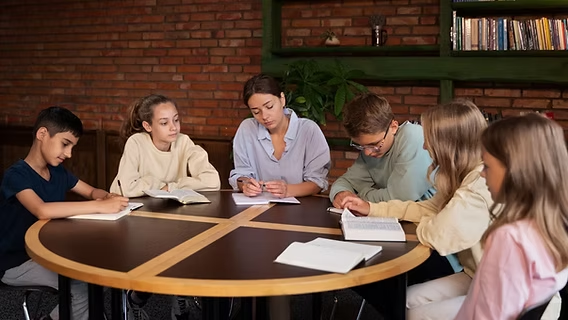
    Education is often seen as an individual activity, but students can also learn a great deal by working with others. Group learning gives students an opportunity to exchange ideas, discuss problems, and work together toward a common goal.

    Whether it takes place in a classroom, laboratory, workshop, or online environment, collaborative learning can introduce students to different ways of thinking. It also helps them develop communication and teamwork skills that can be useful beyond their education.

    Learning From Different Perspectives

    Every student approaches a subject differently. One student may understand a concept through examples, while another may find it easier to understand through diagrams or practical explanations.

    When students work together, they can share these different approaches. A student who understands a topic well may explain it to a classmate, while another student may introduce a different way of solving the same problem.

    This exchange can help make difficult subjects easier to understand.

    Improving Communication Skills

    Communication is an important part of group learning. Students need to explain their ideas clearly and listen carefully when others are speaking.

    Group projects can encourage students to practice asking questions, giving explanations, presenting information, and responding respectfully to different opinions.

    These skills are useful not only in education but also in future workplaces and everyday situations.

    Developing Teamwork

    Many real-world tasks require people to work together. Group learning gives students an early opportunity to understand how teamwork works.

    A group project may require students to divide responsibilities, establish deadlines, and make decisions together. Each person may have a different role, but the final result depends on everyone’s contribution.

    Through these experiences, students can learn that successful teamwork requires communication, reliability, and respect.

    Building Confidence

    Some students feel uncomfortable speaking in front of a large classroom. Working in a smaller group can provide a less intimidating environment for participation.

    As students become more comfortable sharing ideas with classmates, their confidence may gradually increase.

    Small group discussions can also give quieter students an opportunity to contribute ideas that they might not express during a larger classroom discussion.

    Learning to Handle Different Opinions

    People do not always agree, and group activities can teach students how to deal with differences respectfully.

    A student may have a different solution or interpretation from another member of the group. Instead of treating disagreement as a problem, students can learn to explain their reasoning and consider the evidence behind another person’s position.

    This can encourage open-mindedness and thoughtful discussion.

    Developing Problem-Solving Skills

    Group activities often involve problems that require several ideas before a solution can be found.

    Students can brainstorm possible approaches, compare their advantages and disadvantages, and decide which option to try.

    If the first solution does not work, the group can discuss what went wrong and develop another approach. This process gives students practical experience with problem-solving.

    Encouraging Responsibility

    Group projects work best when every student contributes. This creates an opportunity for students to develop a sense of responsibility.

    When a student is assigned a specific task, other members may depend on that work to complete the larger project. Meeting deadlines and completing responsibilities therefore become important parts of the learning experience.

    Teachers can support this process by assigning clear roles and helping students understand how individual contributions affect the group.

    Combining Group and Individual Learning

    Group learning does not need to replace individual study. Both approaches can serve different purposes.

    Individual study allows students to work at their own pace and focus on areas where they need additional practice. Group learning, on the other hand, provides opportunities for discussion, collaboration, and shared problem-solving.

    Combining both approaches can give students a more balanced educational experience.

    Technology and Collaborative Learning

    Technology has expanded the possibilities for group learning. Students can collaborate through online classrooms, shared documents, video meetings, discussion platforms, and educational applications.

    These tools can be especially useful when students cannot meet in the same physical location.

    However, technology should support meaningful collaboration rather than simply providing another communication channel. Students still need clear goals, responsibilities, and opportunities to contribute.

    The Teacher’s Role

    Teachers play an important role in making group learning effective. They can create appropriate activities, explain expectations, assign responsibilities, and monitor student participation.

    Teachers can also help resolve problems when group members disagree or when some students are contributing less than others.

    Good guidance allows students to focus on learning while gradually developing the skills needed to work independently with others.

    Final Thoughts

    Group learning can provide students with more than academic knowledge. It can help them communicate clearly, listen to different perspectives, solve problems, share responsibilities, and work toward common goals.

    When combined with individual study and effective teacher guidance, collaborative learning can create a richer educational experience.

    The ability to learn with others is a valuable skill that students can carry with them from the classroom into higher education, professional environments, and everyday life.

  • How Libraries Support Modern Education

    How Libraries Support Modern Education

    Libraries have been an important part of education for centuries. Although the way people access information has changed, libraries continue to provide valuable resources for students, teachers, researchers, and communities.

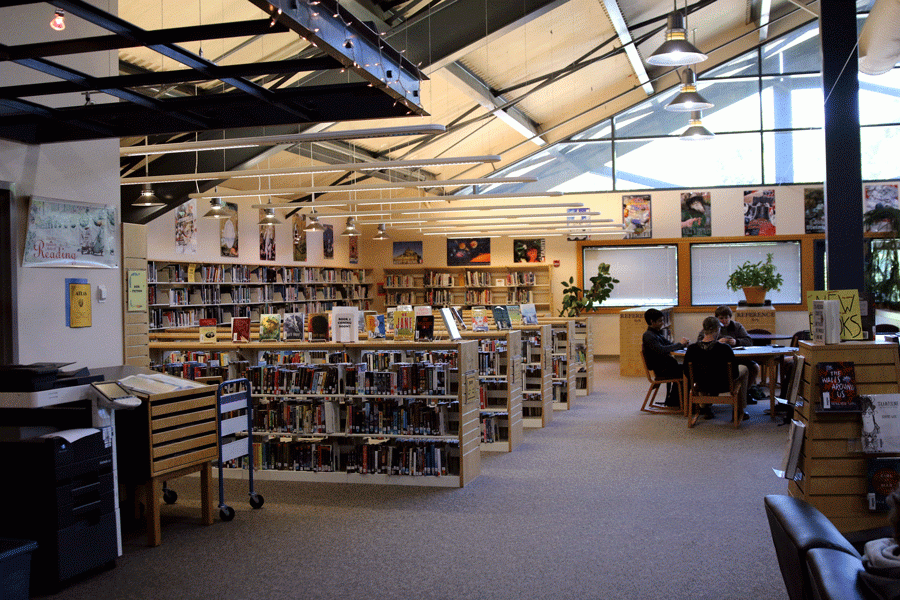
    Modern libraries are no longer limited to shelves filled with printed books. Many now provide digital resources, online databases, research materials, study spaces, computers, and educational programs. This combination of traditional and modern resources allows libraries to remain useful in an increasingly digital world.

    Access to Reliable Information

    Students need reliable information when completing assignments and conducting research. Libraries can provide access to books, academic journals, reference materials, and other carefully selected resources.

    Learning how to find trustworthy information is an important part of education. Instead of relying only on random search results, students can learn how to identify appropriate sources and compare information from different publications.

    This can improve the quality of research and encourage students to develop better information habits.

    Supporting Independent Learning

    A library gives students an opportunity to explore subjects beyond their regular classroom lessons.

    A student interested in astronomy, history, technology, literature, or another subject can find additional resources and study at their own pace. This encourages curiosity and allows learners to investigate topics that may not receive much attention during regular classes.

    Independent learning can also help students become more confident in finding answers for themselves.

    Digital Resources in Modern Libraries

    Technology has changed the way libraries operate. Many educational institutions now provide access to electronic books, online journals, research databases, digital archives, and other resources.

    Students may be able to access these materials using computers or mobile devices, depending on the services provided by their institution.

    Digital resources are particularly useful for research because they can allow students to find information more quickly while also providing access to materials that may not be available in physical form.

    A Quiet Place to Study

    The learning environment can have a significant effect on concentration. Not every student has access to a quiet place at home, especially in busy households.

    Libraries can provide dedicated spaces where students can read, write, research, or prepare for examinations with fewer distractions.

    A quiet study environment can make it easier for students to focus on complex tasks and organize their thoughts.

    Developing Research Skills

    Research is an important part of higher education. Students may eventually need to write essays, prepare presentations, complete academic projects, or conduct detailed investigations.

    Libraries can help students learn how to approach these tasks. Librarians can often guide students toward appropriate resources and explain how to search for information effectively.

    These research skills can become increasingly valuable as students progress through their education.

    Encouraging a Reading Culture

    Libraries can also encourage students to develop a regular reading habit.

    Not every book needs to be connected directly to an examination or assignment. Fiction, biographies, science books, history publications, magazines, and other reading materials can introduce students to new ideas and perspectives.

    Regular reading can improve vocabulary and comprehension while also encouraging curiosity.

    The Role of Librarians

    Librarians are an important part of the modern educational environment. Their role is not simply to organize books.

    They can help students locate resources, understand research databases, evaluate sources, and develop better information-searching skills.

    For students who are unfamiliar with academic research, guidance from a librarian can make the process less confusing and more efficient.

    Libraries as Community Spaces

    Libraries can also bring people together. Educational institutions may use library spaces for workshops, reading groups, discussions, presentations, and other learning activities.

    These activities can create opportunities for students to communicate and learn from one another.

    A library can therefore serve not only as a place for individual study but also as a shared educational environment.

    Adapting to the Future

    Education will continue to change as technology develops. Libraries are adapting by combining physical resources with digital services and creating new ways for people to access information.

    The future library may look different from the traditional library, but its basic purpose remains similar: helping people discover, understand, and use information.

    As educational resources continue to expand, the ability to navigate information carefully will remain important.

    Final Thoughts

    Libraries continue to play an important role in modern education because they provide access to information, support independent learning, encourage reading, and offer spaces for focused study.

    Technology has expanded what libraries can provide rather than making them unnecessary. Physical books, digital resources, research databases, librarians, and study spaces can work together to support students throughout their education.

    For students, a library can be more than a place to borrow books. It can be a place to ask questions, discover new subjects, develop research skills, and build habits that support lifelong learning.