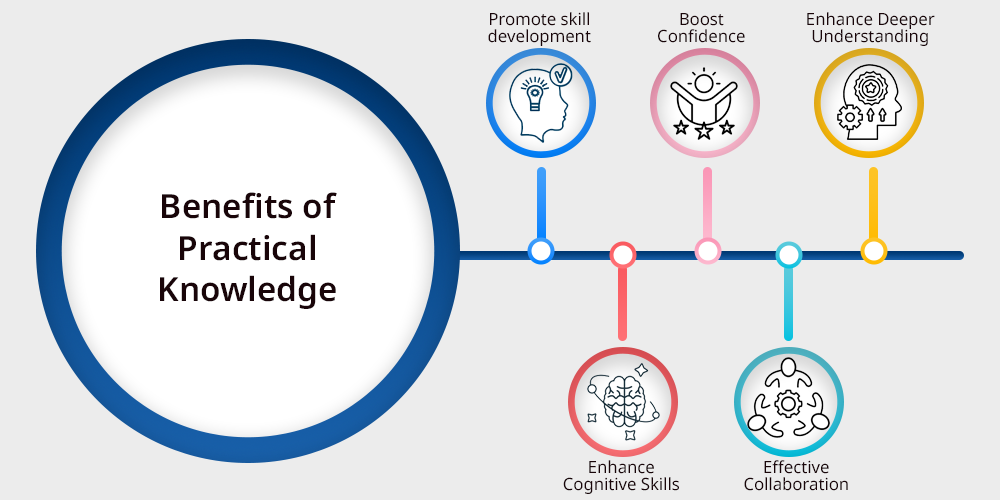
Education is often associated with textbooks, lectures, assignments, and examinations. These traditional methods are important, but students can understand many concepts more effectively when they have an opportunity to apply what they learn in practical situations.
Practical learning allows students to move beyond theory and experience how knowledge works in the real world. It can include experiments, projects, field trips, workshops, presentations, internships, and other activities that require students to actively participate in the learning process.
Connecting Theory With Real Life
One of the main benefits of practical learning is that it helps students connect classroom knowledge with real-world situations.
For example, a science student may understand a concept through a textbook, but conducting an experiment can provide a clearer understanding of how that concept works. Similarly, business students can learn about marketing strategies and then apply those ideas to a practical project.
These experiences can make lessons easier to understand and remember.
Developing Problem-Solving Skills
Real-world problems rarely have simple answers. Students often need to examine a situation, identify the main issue, consider possible solutions, and decide which approach is most appropriate.
Practical activities give students opportunities to develop these skills.
A project may not always go exactly as planned, and that can be valuable. Students can learn to identify mistakes, adjust their approach, and try again. This process can teach them that solving a problem often requires patience and experimentation.
Encouraging Active Participation
Traditional lectures can sometimes make students passive listeners. Practical learning encourages them to become active participants.
Instead of only listening to an explanation, students may need to conduct research, build something, perform an experiment, create a presentation, or work with classmates.
Active participation can make learning more engaging because students have a direct role in the process.
Building Communication Skills
Many practical learning activities involve teamwork. Students may need to discuss ideas, divide responsibilities, explain their findings, and present their work to others.
These activities can help develop communication skills that are useful in both education and professional life.
Learning how to explain an idea clearly is particularly important. A student may understand a topic very well but still need practice communicating that knowledge to other people.
Preparing Students for Professional Life
Education also prepares students for responsibilities beyond school and university. Practical experience can introduce them to situations they may encounter in their future careers.
Internships, workshops, laboratory activities, and project-based assignments can help students understand how theoretical knowledge is applied in professional environments.
They can also provide opportunities to develop habits such as meeting deadlines, working with others, following instructions, and taking responsibility for assigned tasks.
Learning From Mistakes
Mistakes are a natural part of practical learning. A student may conduct an experiment incorrectly, make an error in a project, or discover that an initial idea does not work.
Instead of simply receiving a grade, students can examine what went wrong and consider how they could improve the result.
This process can develop resilience and encourage students to approach challenges with a more constructive attitude.
Making Learning More Memorable
People often remember experiences more easily when they actively participate in them. Practical activities can create memorable learning experiences because students are doing something rather than only reading or listening.
For example, visiting a museum, conducting a science experiment, creating a computer project, or participating in a community activity can give students a practical connection to a subject.
These experiences may help students remember important concepts long after a lesson has ended.
Technology and Practical Education
Modern technology has created even more opportunities for practical learning. Simulations, educational software, virtual laboratories, design tools, and online collaboration platforms can allow students to practice skills in different environments.
Technology can be particularly useful when certain activities are expensive, difficult, or unsafe to perform in a traditional classroom.
However, digital tools work best when they support clear educational goals rather than simply adding technology to a lesson.
The Role of Teachers
Teachers remain important in practical learning. They can design meaningful activities, provide instructions, monitor progress, and give feedback.
A teacher can also help students understand the connection between an activity and the academic concepts behind it. Without proper guidance, a practical task may become simply an activity rather than a meaningful learning experience.
Good planning can ensure that students understand both what they are doing and why they are doing it.
Final Thoughts
Practical learning can make education more engaging by connecting theoretical knowledge with real-world experience. It can help students develop problem-solving, communication, teamwork, and decision-making skills while giving them opportunities to learn from mistakes.
The most effective education does not necessarily require choosing between traditional teaching and practical activities. Combining classroom instruction with hands-on experiences can give students a broader and more useful learning experience.
When students have opportunities to apply their knowledge, education can become more than memorizing information. It can become a process of discovering how that knowledge works in the world around them.
Leave a Reply