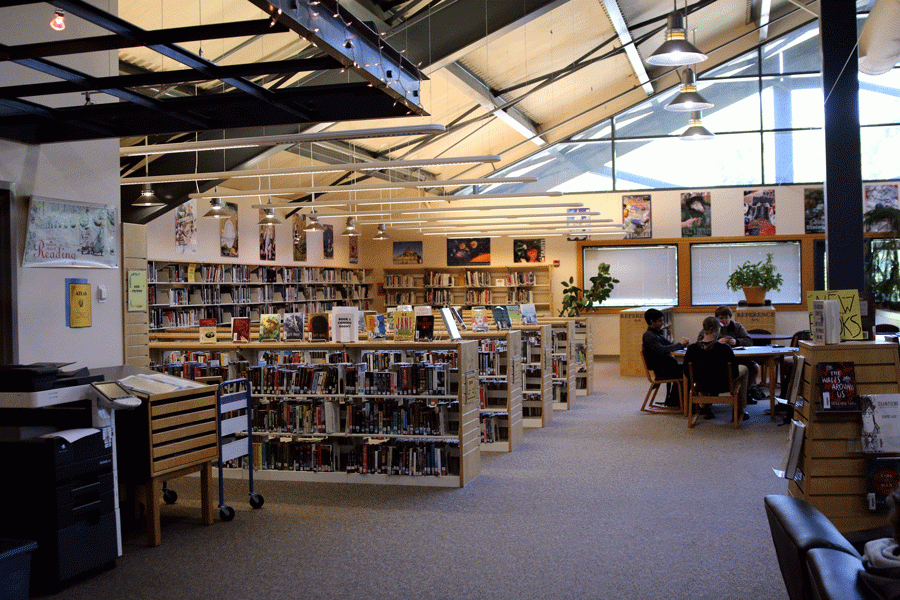
Libraries have been an important part of education for centuries. Although the way people access information has changed, libraries continue to provide valuable resources for students, teachers, researchers, and communities.
Modern libraries are no longer limited to shelves filled with printed books. Many now provide digital resources, online databases, research materials, study spaces, computers, and educational programs. This combination of traditional and modern resources allows libraries to remain useful in an increasingly digital world.
Access to Reliable Information
Students need reliable information when completing assignments and conducting research. Libraries can provide access to books, academic journals, reference materials, and other carefully selected resources.
Learning how to find trustworthy information is an important part of education. Instead of relying only on random search results, students can learn how to identify appropriate sources and compare information from different publications.
This can improve the quality of research and encourage students to develop better information habits.
Supporting Independent Learning
A library gives students an opportunity to explore subjects beyond their regular classroom lessons.
A student interested in astronomy, history, technology, literature, or another subject can find additional resources and study at their own pace. This encourages curiosity and allows learners to investigate topics that may not receive much attention during regular classes.
Independent learning can also help students become more confident in finding answers for themselves.
Digital Resources in Modern Libraries
Technology has changed the way libraries operate. Many educational institutions now provide access to electronic books, online journals, research databases, digital archives, and other resources.
Students may be able to access these materials using computers or mobile devices, depending on the services provided by their institution.
Digital resources are particularly useful for research because they can allow students to find information more quickly while also providing access to materials that may not be available in physical form.
A Quiet Place to Study
The learning environment can have a significant effect on concentration. Not every student has access to a quiet place at home, especially in busy households.
Libraries can provide dedicated spaces where students can read, write, research, or prepare for examinations with fewer distractions.
A quiet study environment can make it easier for students to focus on complex tasks and organize their thoughts.
Developing Research Skills
Research is an important part of higher education. Students may eventually need to write essays, prepare presentations, complete academic projects, or conduct detailed investigations.
Libraries can help students learn how to approach these tasks. Librarians can often guide students toward appropriate resources and explain how to search for information effectively.
These research skills can become increasingly valuable as students progress through their education.
Encouraging a Reading Culture
Libraries can also encourage students to develop a regular reading habit.
Not every book needs to be connected directly to an examination or assignment. Fiction, biographies, science books, history publications, magazines, and other reading materials can introduce students to new ideas and perspectives.
Regular reading can improve vocabulary and comprehension while also encouraging curiosity.
The Role of Librarians
Librarians are an important part of the modern educational environment. Their role is not simply to organize books.
They can help students locate resources, understand research databases, evaluate sources, and develop better information-searching skills.
For students who are unfamiliar with academic research, guidance from a librarian can make the process less confusing and more efficient.
Libraries as Community Spaces
Libraries can also bring people together. Educational institutions may use library spaces for workshops, reading groups, discussions, presentations, and other learning activities.
These activities can create opportunities for students to communicate and learn from one another.
A library can therefore serve not only as a place for individual study but also as a shared educational environment.
Adapting to the Future
Education will continue to change as technology develops. Libraries are adapting by combining physical resources with digital services and creating new ways for people to access information.
The future library may look different from the traditional library, but its basic purpose remains similar: helping people discover, understand, and use information.
As educational resources continue to expand, the ability to navigate information carefully will remain important.
Final Thoughts
Libraries continue to play an important role in modern education because they provide access to information, support independent learning, encourage reading, and offer spaces for focused study.
Technology has expanded what libraries can provide rather than making them unnecessary. Physical books, digital resources, research databases, librarians, and study spaces can work together to support students throughout their education.
For students, a library can be more than a place to borrow books. It can be a place to ask questions, discover new subjects, develop research skills, and build habits that support lifelong learning.
Leave a Reply